Aug 6, 2025
3 min read
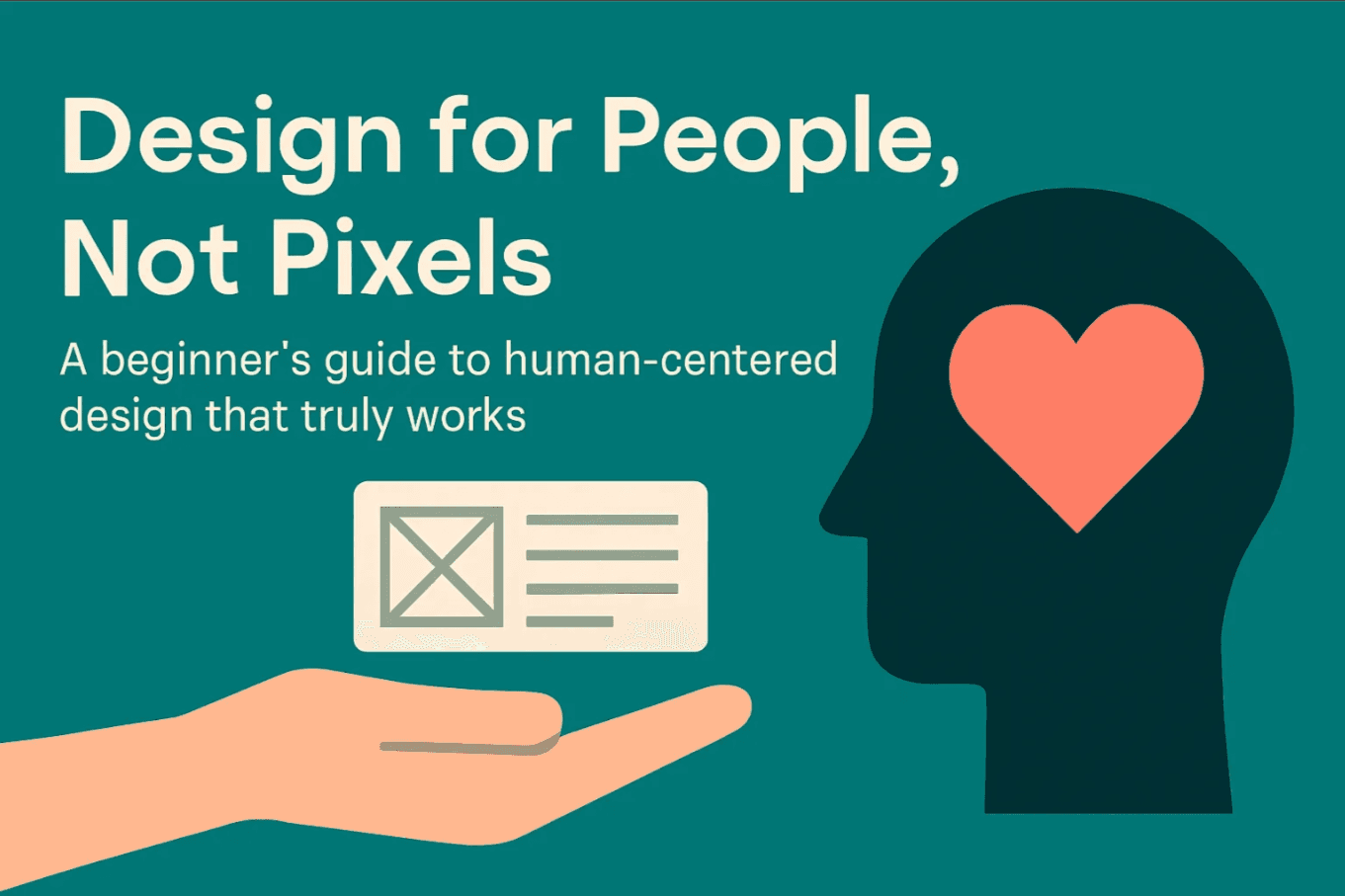
Design for people, not pixels: A beginner’s guide to “Human-Centered Design” that truly works
Learn how to craft designs that connect with real people, not just screens
Introduction
Here’s a hard truth:
Some designs win awards and still fail miserably in the real world.
Why? Because they were designed for Dribbble likes, not for actual people.
As a UI/UX designer, I’ve seen it happen over and over gorgeous apps that no one enjoys using. The problem isn’t a lack of talent. It’s a lack of “Human-Centered Thinking”
In this post, I’ll break down what Human-Centered Design (HCD) means, why it matters in 2025 and beyond, and how you can apply it to create work that users genuinely value.
In this post, I’ll explain what Human-Centered Design (HCD) is, why it’s important in 2025 and beyond, and how you can use it to create work that users truly value
So… What exactly is Human-Centered Design?
Human-Centered Design is like being a detective for people’s needs.
Instead of starting with “What’s the trend right now?” you start with “What problem is this person facing?”
It’s not about making the UI look good. It’s about making it work for the human on the other side of the screen.
The Core Idea:
Understand your users deeply.
Solve their real problems.
Test your ideas with them.
improve based on their feedback.
Stop guessing, start listening
Designers often fall into the “I know what the user wants” trap.
Spoiler alert: You don’t.
The fastest way to know? Ask them.
Context is king
Users interact with your design in messy, real-life situations:
One-handed while carrying groceries
In bright sunlight
While half-asleep at 2 AM
💡If you design for perfect conditions only, you’re designing for… nobody.
I always test prototypes on my phone, outside, and in noisy environments. If it still works there, it’ll work anywhere.
Accessibility is your superpower
Accessibility isn’t a “bonus feature,” it’s table stakes.
Designing for all abilities makes your work better for everyone.
Quick Wins:
High contrast color palettes
Keyboard-friendly navigation
Alt text for images
Clear, readable typography
I’ve seen projects go from mediocre to amazing just by improving accessibility, and yes, users notice.
Iterate as like you mean it
Human-Centered Design isn’t a one-shot deal.
You design, test, tweak, and repeat.
Think of it like cooking; you taste and adjust the seasoning until it’s just right.
I never “launch and leave.” I set up feedback loops, watch analytics, and adjust based on real usage data.
The mindset shift: From designer to problem solver
The real magic happens when you stop thinking, “I design screens,” and start thinking, “I solve problems.”
That’s when your designs start living in people’s daily routines, not just in your portfolio.
Human-centered design isn’t just a method; it’s a mindset.
It keeps your work relevant in a world where tools, trends, and tech change overnight.
And here’s the best part: When you design for people, your work not only looks good but feels good to use.
So, next time you start a project, remember it’s not about pixels, it’s about people.